
I was waiting at a shopping-center checkout with my cart. My Tesla Model 3 was upstairs in the rooftop parking lot, sitting through Japan’s late-summer heat.
I used the button on my Pebble Index 01 and spoke in Japanese:
「車ひやしておいて」
“Cool the car down for me.”
By the time I reached the car, the cabin felt comfortably cold. I could get in and drive home comfortably.
That small improvement to an ordinary shopping trip is what made this experiment worth writing about.
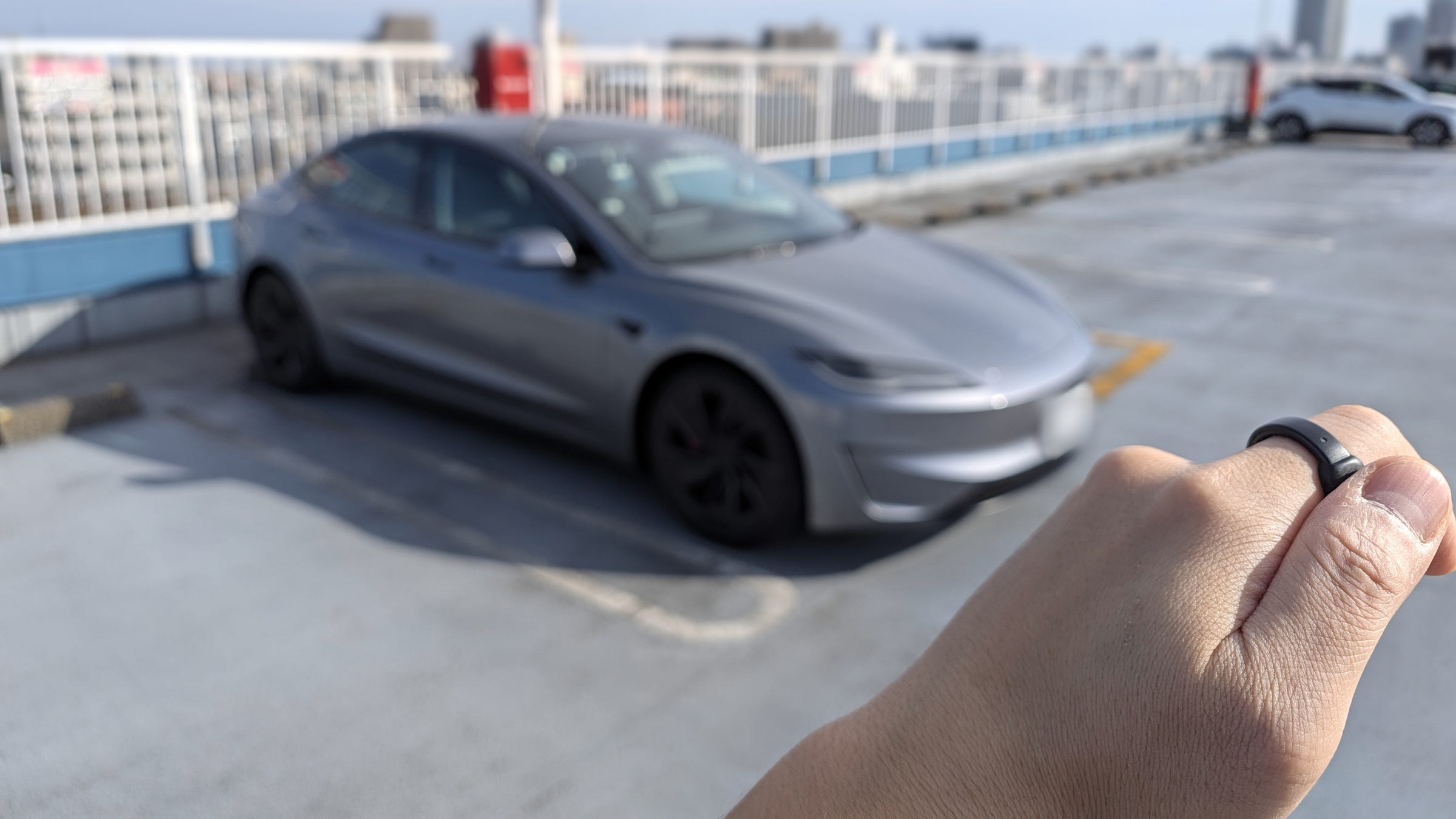
Index 01 with my Model 3. All photos, app screenshots, and video in this article come from a later demonstration, rather than the late-summer trip described above.
What the ring adds
Tesla already lets owners turn on the climate control from its phone app. The experiment here is about a different way to ask for it.
The appeal of the ring is being able to make a short spoken request in the middle of another task. At checkout, I still had the queue and the walk to the rooftop ahead of me. It was a useful moment to start cooling the car.
I haven’t systematically compared this with using the Tesla app or other voice shortcuts. I can’t say it is faster. On that shopping trip, though, the voice route fit what I was doing.
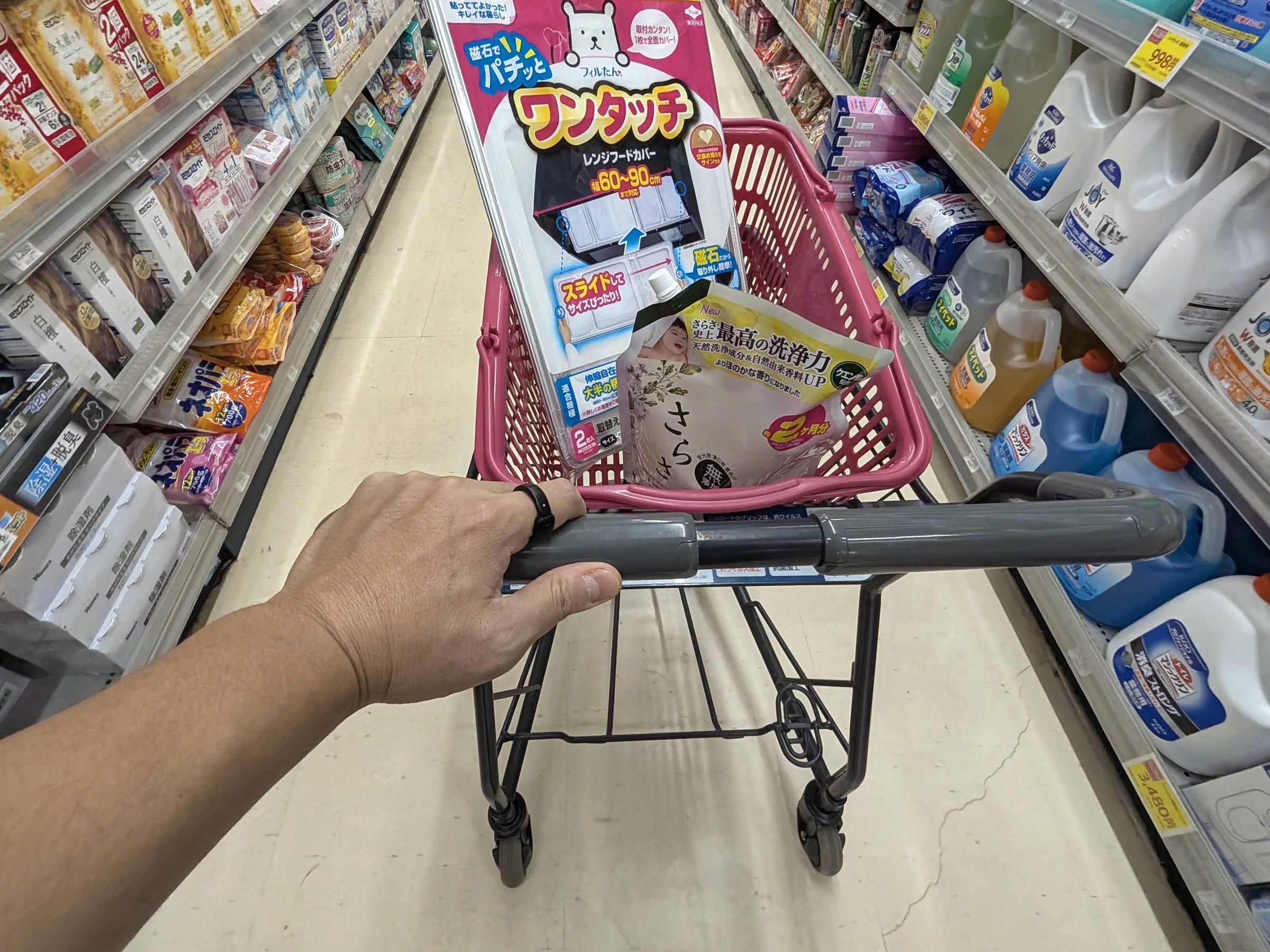
Shopping with Index 01. This photograph recreates the everyday setting; it was taken later.
There is a custom connection behind it
Index 01 is a small ring with a button and a microphone. It sends recordings to the Pebble phone app, where speech recognition and an assistant can process them. The intelligence is in the connected system, rather than the ring itself.
For my experiment, I use a custom integration that connects the assistant’s tool requests to my Tesla. Buying the ring alone does not give you this setup.
The simplified path is:
Ring recording → phone app and assistant → custom cloud integration → Tesla climate control
The Tesla connection uses account authorization and a vehicle virtual key. It takes setup and maintenance beyond pairing the ring with a phone. This is an account of using that custom connection, rather than a setup tutorial.
I’m a product professional based in Japan, rather than an engineer. What interests me is whether combinations like this become useful enough to earn a place in daily life.
My summer cooling action uses the lowest temperature setting. I didn’t measure the cabin temperature or time the response during the original trip. “Comfortably cold” describes how the cabin felt when I returned.
A 52-second demonstration filmed later. Here I say 「テスラ冷やして」—“Cool the Tesla down.” The command quoted at the start of the article is what I said on the original shopping trip. The edited sequence does not show elapsed response or cooling time.
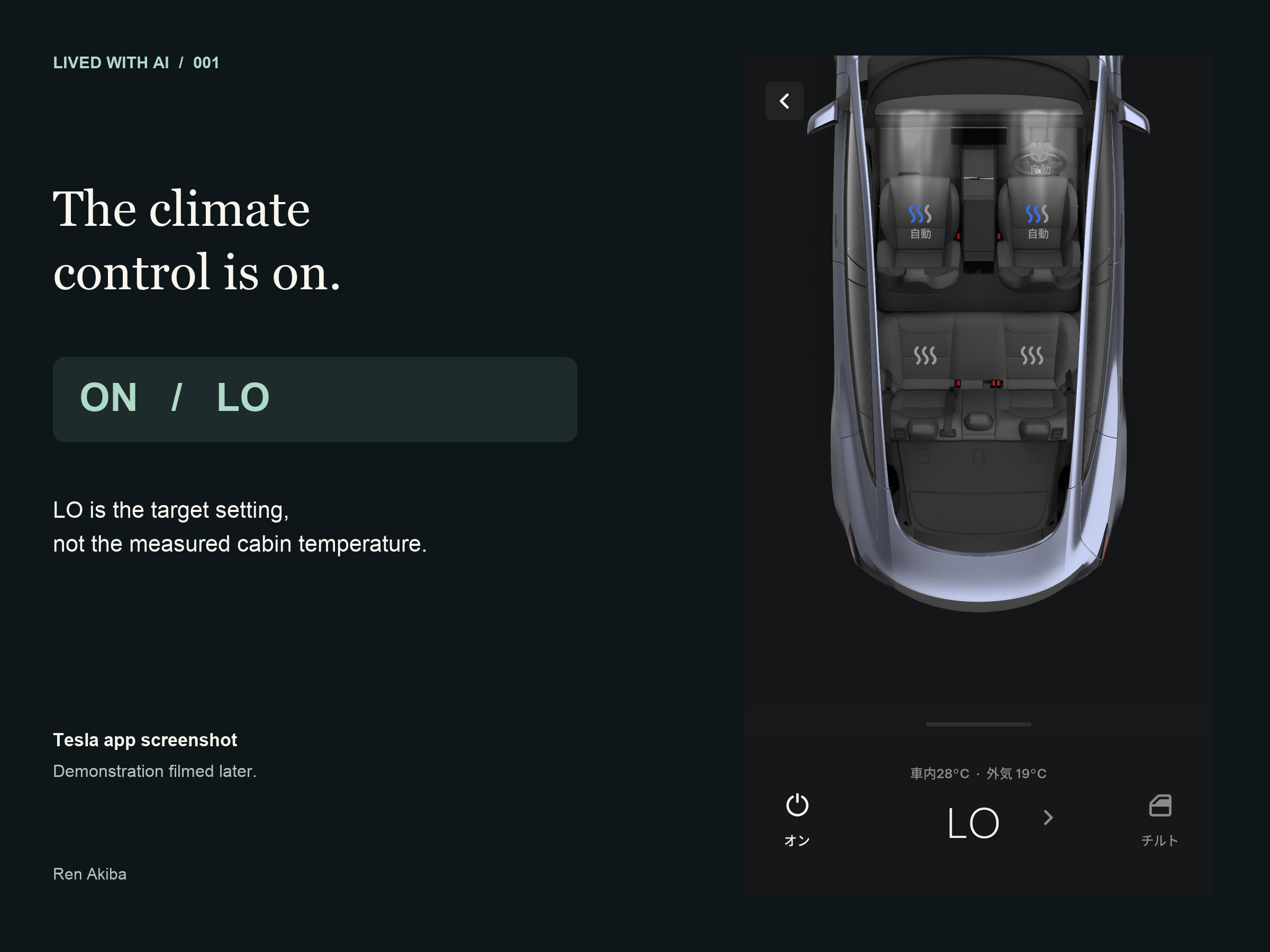
The Tesla app during the later demonstration. Climate control is on, with the target set to LO. The displayed temperatures belong to that demonstration; they are not measurements from the summer trip or a before-and-after cooling test.
Two things still get in the way
The button gesture. The double-click interaction in my setup sometimes fails to register as intended. That is frustrating in exactly the situation where I want a quick request to be convenient. Repeating the gesture takes away some of the benefit.
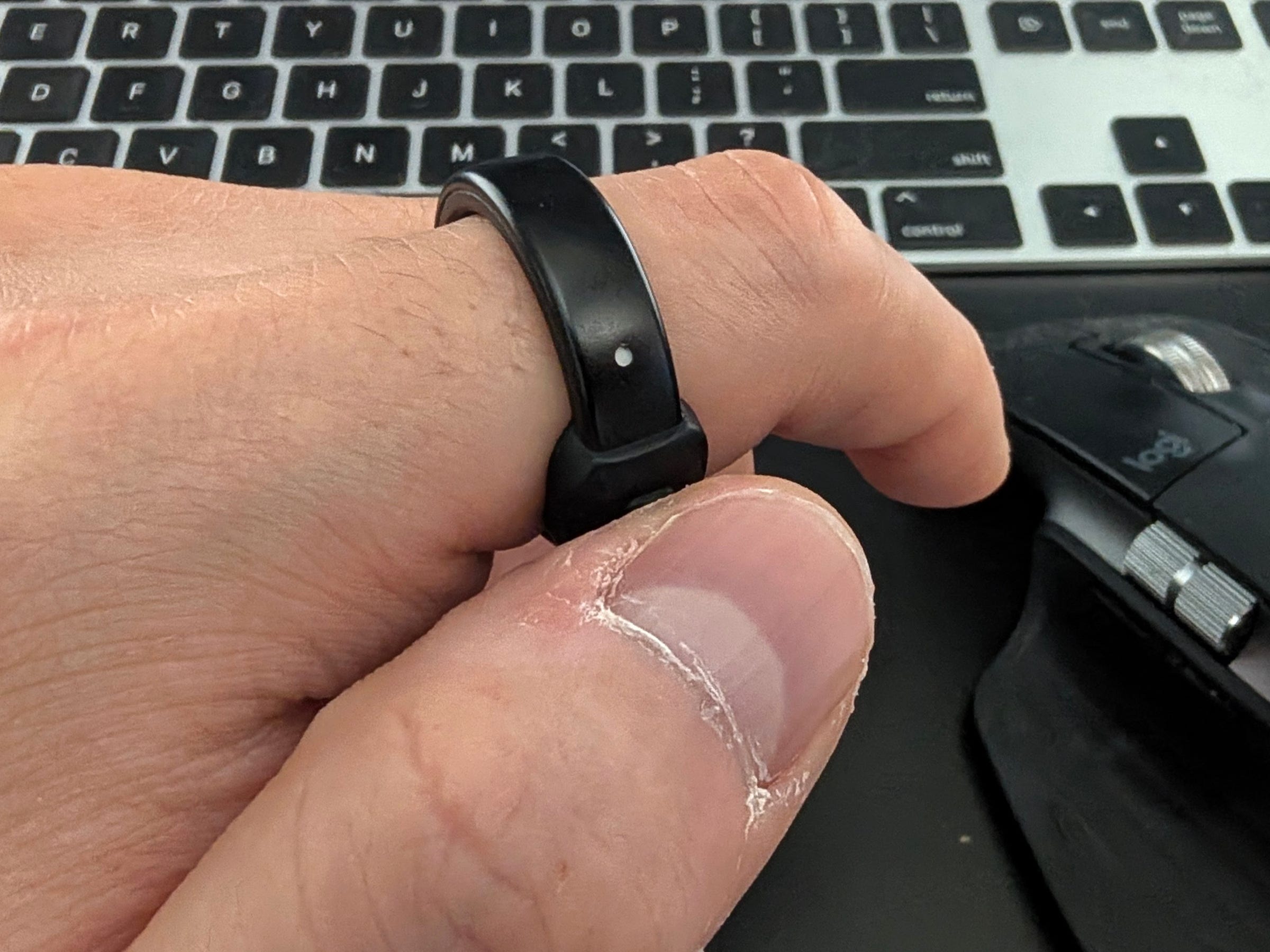
A closer look at the button and my thumb position. Photographed later.
Japanese speech recognition. Even when the gesture works, the transcription is not yet as reliable as I want it to be. Recognizing the button interaction and recognizing the spoken words are separate problems.
The setup is designed to accept variations in how I ask for cooling, but that flexibility only helps once the words have been captured well enough. I don’t have a measured success rate to report.
I want to try a speech-recognition service such as Soniox to see whether it improves the Japanese transcription. That is a future experiment; I haven’t tested that change yet.
Useful once. Reliable enough to keep using?
The shopping trip answered one question: could this combination do something useful in a real routine? For me, it did. I asked for cooling while waiting to pay and returned to a comfortable car.
The next question needs more repeated use. How often does the gesture work on the first try? How often is the Japanese request transcribed correctly? How much checking or repetition does it need compared with the phone app?
A successful moment is a good reason to keep testing. The rough edges will determine whether I keep reaching for the ring.
Lived With AI is where I share experiments with AI and the devices around it, from daily life in Japan. Subscribe for future experiments.
Disclosure: I paid for the Index 01 and the Tesla myself. Neither company supplied or lent me a product for this article, or paid me to write it. There are no affiliate links.
Production note: I used AI assistance to prepare the English text and edit the media. The experience is my own. Photos, video, and app screens come from my original recordings, with cropping, adjustments, and privacy masking; no photos or interface details were generated by AI.